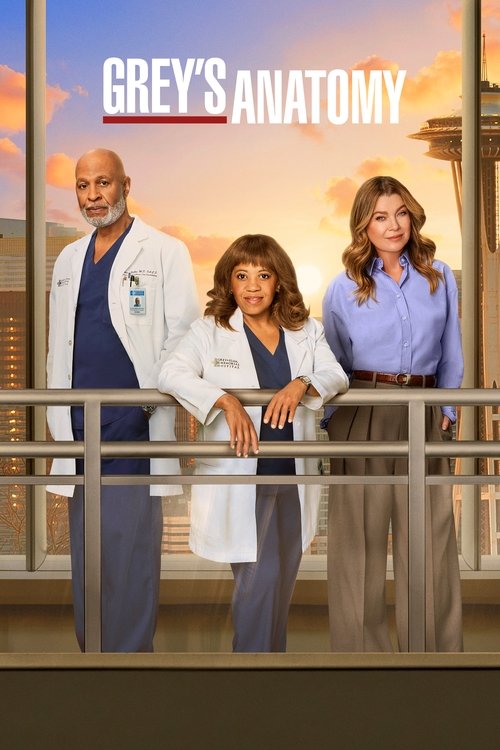
Original Title: Grey's Anatomy
Year: 2005
Genre: Drama
Duration: N/A
Cast: Ellen Pompeo, Chandra Wilson, James Pickens Jr., Caterina Scorsone
Grey's Anatomy, Shonda Rhimes' medical drama behemoth, premiered in 2005 and quickly carved out a significant niche in the television landscape. Following the tumultuous lives of surgical interns and their mentors at Seattle Grace Hospital (later Grey Sloan Memorial), the series became synonymous with high-stakes medical cases intertwined with even higher-stakes personal relationships. It's a show that masterfully balanced the intricate demands of the operating room with the messy realities of the human heart, defining an era of network television.
Character & Emotional Depth
At its core, Grey's Anatomy thrives on its richly drawn characters and their often-complex arcs. From Meredith Grey's journey through trauma and love, to Cristina Yang's relentless pursuit of surgical excellence, and Miranda Bailey's evolution from 'The Nazi' to a compassionate chief, the series invests deeply in its ensemble. The raw emotional honesty with which it tackles grief, betrayal, ambition, and resilience is arguably its greatest strength. Rhimes' signature dialogue crackles with wit and poignancy, ensuring that even the most improbable scenarios resonate with a sense of authentic human experience. The initial cast, including Ellen Pompeo, Chandra Wilson, and James Pickens Jr., delivered performances that anchored the series, making their characters iconic figures in modern drama.
The Pulse of Medical Drama
Beyond the romance and rivalry, Grey's Anatomy consistently delivers compelling medical cases. While some might question the surgical accuracy or the sheer volume of rare conditions seen in one hospital, the series excels at using these cases to drive narrative and explore ethical dilemmas. The fast-paced, high-pressure environment of a teaching hospital provides a constant backdrop for the personal stories to unfold, creating a potent cocktail of life-and-death stakes both inside and outside the OR. The visual storytelling, particularly during surgical scenes, keeps viewers engaged, often highlighting the visceral nature of medicine.
Longevity & Evolution
For a series to run for nearly two decades is a testament to its enduring appeal, though this longevity comes with its own set of challenges. Grey's Anatomy has proven adept at reinventing itself, introducing new characters and exploring contemporary social issues, from healthcare reform to systemic racism. However, the frequent cast changes and the cyclical nature of its romantic plotlines have, at times, led to accusations of repetitiveness or a dilution of its original narrative power. Despite this, the series has consistently found ways to connect with new generations of viewers while maintaining its loyal fanbase, solidifying its place as a cultural phenomenon.
The Verdict
Grey's Anatomy is more than just a medical drama; it’s a sprawling saga about life, death, love, and ambition. While its narrative quality has ebbed and flowed over its extensive run, its impact on popular culture and its ability to provoke genuine emotional responses remain undeniable. It is a series that pushed boundaries, launched careers, and perhaps most importantly, made millions care deeply about the fates of fictional doctors. Its legacy is cemented as a cornerstone of modern television drama.
Considering the dramatic turns and numerous departures, which Grey's Anatomy character's send-off do you believe was the most impactful or fitting?










💬 Comments (0)