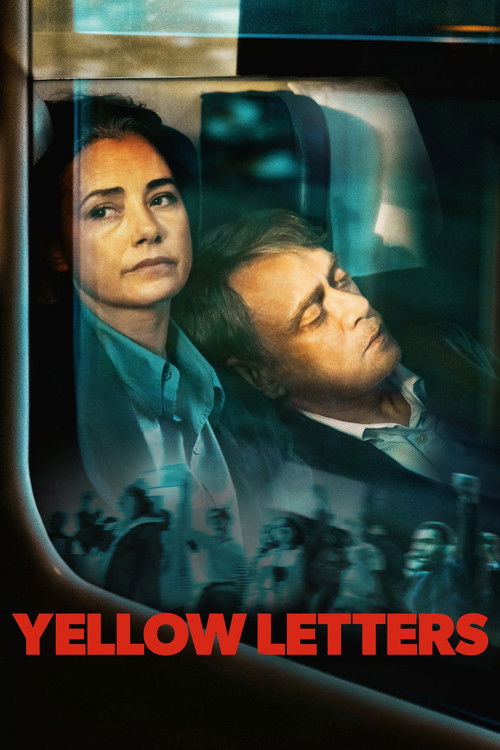
In 2026, acclaimed director İlker Çatak delivers a poignant and timely drama with 'Yellow Letters,' originally titled 'Gelbe Briefe.' This film plunges deep into the heart of a family fractured by external forces, navigating the treacherous waters of economic uncertainty and the erosion of personal autonomy. It’s a powerful testament to the resilience of the human spirit when faced with insurmountable odds, anchored by a compelling narrative and stellar performances.
The Storyline
'Yellow Letters' introduces us to Derya and Aziz, a couple whose stable, if unexciting, life is shattered by an arbitrary act of state power. Losing their jobs due to undisclosed 'state arbitrariness' forces them to abandon their established lives and move to Istanbul, seeking refuge and support under Aziz's parents' roof. This drastic relocation isn't just a change of address; it's a fundamental redefinition of their existence. The loss of their livelihood isn't merely financial; it's an assault on their identity, independence, and dignity. The plot expertly unpacks the ripple effects of this trauma, not only on the marital dynamic between Derya and Aziz but also on their 13-year-old daughter, Ezgi. Ezgi's world, once perhaps predictable, is now upended, forcing her to grapple with a new school, new surroundings, and the palpable tension within her own family. The narrative explores the complexities of intergenerational living, the clash of expectations, and the suffocating weight of dependency. Çatak masterfully uses the family's plight as a microcosm for broader societal issues, particularly the vulnerability of individuals in the face of unchecked governmental authority and the ever-present struggle for self-preservation in a rapidly changing world.
Performances & Direction
İlker Çatak, fresh off the international success of films like 'The Teachers' Lounge,' proves once again his profound ability to craft intimate, high-stakes dramas that resonate deeply. His direction in 'Yellow Letters' is meticulous, empathetic, and unflinchingly honest. He draws out the raw, unvarnished emotions of his characters, allowing their pain, frustration, and fleeting moments of hope to feel utterly authentic. The camerawork often feels intrusive, mirroring the characters' lack of privacy and control, yet never exploitative. At the heart of the film are the extraordinary performances of Özgü Namal as Derya and Tansu Biçer as Aziz. Namal delivers a powerhouse portrayal of Derya, capturing her internal struggle between despair and defiance, her vulnerability and her fierce protectiveness of her family. Her face often conveys more than dialogue ever could, a canvas of unspoken anxieties and frustrations. Biçer as Aziz is equally compelling, depicting a man burdened by the weight of responsibility and the emasculating reality of his situation. His quiet desperation and attempts to maintain a semblance of control are heartbreakingly real. The chemistry between Namal and Biçer is palpable, selling the history and the strained love between a couple pushed to their breaking point. While Ezgi's actress is not named, her performance is crucial in reflecting the younger generation's adaptation and coping mechanisms, serving as a vital emotional barometer for the family's journey.
Final Verdict
'Yellow Letters' is more than just a family drama; it's a socio-political commentary wrapped in a deeply personal narrative. İlker Çatak has crafted a film that is both intellectually stimulating and emotionally devastating, asking profound questions about identity, resilience, and the cost of survival. While its themes are heavy, the film's honesty and the outstanding performances make it an essential watch. It's a somber, yet ultimately hopeful, exploration of the human capacity to adapt and rediscover purpose when everything familiar is stripped away. It might leave you pondering the arbitrary nature of fate and power long after the credits roll.
Rating: 8.5/10
What does 'Yellow Letters' make you consider about the definition of home and family?










💬 Comments (0)