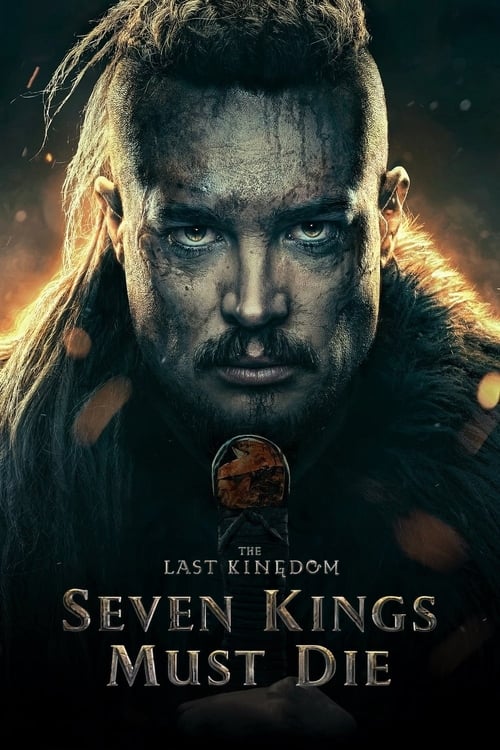
Original Title: The Last Kingdom: Seven Kings Must Die
Year: 2023
Genre: Action, Adventure, War
Duration: 1h 51min
Cast: Alexander Dreymon, Harry Gilby, Mark Rowley, Arnas Fedaravičius
A Valiant Farewell to a Legendary Saga
'The Last Kingdom: Seven Kings Must Die' arrives as a cinematic capstone, aiming to deliver a definitive conclusion to Uhtred of Bebbanburg's decades-long quest. Director Edward Bazalgette is tasked with condensing a sprawling historical narrative into a single, cohesive film, a formidable challenge that the production largely meets with admirable ambition and fervent execution. For those deeply invested in Uhtred's journey, this movie serves as a poignant and often thrilling send-off, striving to tie up the intricate threads of loyalty, destiny, and nation-building.
Narrative Compression and Pacing
The film picks up in the immediate aftermath of King Edward's demise, plunging Uhtred and his loyal companions into a maelstrom of political instability. The premise – uniting a fractured England under a single crown – is grand and consequential. However, the inherent challenge of condensing years of potential storyline into a 1-hour, 51-minute runtime is palpable. While the pacing is brisk, propelling the audience through key events and significant character moments, some narrative beats feel necessarily accelerated. The sheer number of impactful decisions and battles required to achieve the ultimate goal sometimes leaves little room for the lingering character introspection or strategic depth that fans might crave. Yet, Bazalgette manages to maintain clarity and emotional resonance, guiding the plot towards its historical imperative with purpose.
The Heart of Bebbanburg: Alexander Dreymon's Portrayal
Alexander Dreymon once again embodies Uhtred with a seasoned gravitas that speaks volumes of his character's journey. His performance is the anchor of the film, conveying Uhtred's weariness, his unwavering sense of duty, and his profound love for his people and the land he calls home. Dreymon masterfully navigates the emotional complexities of a warrior king burdened by prophecy and legacy. The supporting cast, including Harry Gilby as Aethelstan, Mark Rowley as Finan, and Arnas Fedaravičius as Sihtric, provide strong, familiar performances that reinforce the bonds of comradeship central to Uhtred's story. Their chemistry remains a cornerstone, offering moments of levity and profound loyalty amidst the bloodshed.
Epic Scope and Battle Choreography
As an action and war film, 'Seven Kings Must Die' does not shy away from its genre commitments. The battle sequences are well-staged, brutal, and viscerally engaging, showcasing the tactical prowess and raw intensity expected from this saga. From skirmishes to the climactic confrontation, the choreography is sharp, and the stakes feel genuinely high. The film benefits from a cinematic scale, with impressive costume design and historical accuracy in its depiction of early medieval England. The visual storytelling complements the narrative, making the viewer feel immersed in a world on the cusp of profound change.
Final Verdict: A Kingdom United?
'The Last Kingdom: Seven Kings Must Die' is a fitting, if slightly rushed, conclusion to a beloved epic. It delivers on its promise of adventure, war, and the culmination of Uhtred's destiny. While its brevity necessitates a streamlined approach to its rich source material, the film successfully captures the spirit of its saga, providing a satisfying sense of closure. It stands as a testament to the enduring appeal of Uhtred's quest for identity and the dream of a united England. Fans will undoubtedly appreciate this final chapter, even as they may wish for just a little more time in Bebbanburg.
Considering the film's ambitious goal to unite a fractured England, do you believe the 111-minute runtime adequately served the sprawling historical narrative?






💬 Comments (0)