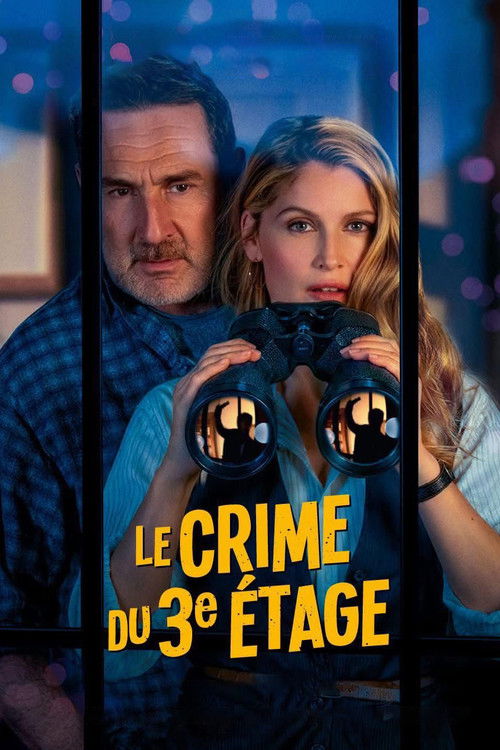
- Original Title: Le Crime du 3e étage
- Year: 2026
- Genre: Comedy, Drama, Crime
- Duration: 1h 46min
- Cast: Gilles Lellouche, Laetitia Casta, Guillaume Gallienne, Isabel Aimé González Sola
A Case of Marital Revitalization: Rémi Bezançon's 'Murder in the Building'
Rémi Bezançon’s "Murder in the Building" (original title: Le Crime du 3e étage) steps into a familiar cinematic trope—the amateur sleuth duo—but injects it with a distinctly French blend of domestic realism, comedic absurdity, and a dash of Hitchcockian suspense. What begins as a portrait of a stagnant, intellectual Parisian marriage soon blossoms into a quirky crime caper, brilliantly exploring how external chaos can reignite internal sparks.
Characters & Performances: The Spark of Suspicion
At the heart of this narrative are François (Gilles Lellouche), a successful but deeply misanthropic crime novelist whose "Agatha Christie meets The Scarlet Pimpernel" escapism starkly contrasts with his mundane reality, and Colette (Laetitia Casta), his partner and a brilliant Sorbonne professor specializing in Alfred Hitchcock. Lellouche masterfully embodies François’s grumpy inertia, a man more comfortable with fictional swashbuckling than real-life engagement. Casta, meanwhile, is captivating as Colette, whose academic fascination with suspense films suddenly finds a terrifying, exhilarating echo in her own apartment building. Their performances are a delicate dance between exasperation and affection, revealing a relationship on the brink of collapse that finds an unexpected lifeline in a potential murder.
The catalytic figure is their flamboyant actor neighbor, portrayed with delightful excess by Guillaume Gallienne. His portrayal is key to the film's comedic tone, providing both suspicion and a necessary dose of theatricality. Isabel Aimé González Sola rounds out the cast with a memorable turn, adding further intrigue to the unfolding drama.
Plot & Pacing: Blurring the Lines of Reality
Bezançon cleverly uses the murder mystery as a prism through which to examine François and Colette's relationship. Colette, yearning for the excitement of the classic films she teaches, is the first to embrace the possibility of a real-life thriller, pushing a reluctant François into an investigation that begins clumsily but quickly escalates. The plot skillfully blurs the lines between François’s fictional narratives, Colette’s academic theories, and the actual events unfolding around them, creating a meta-commentary on the nature of storytelling and perception. The pacing is a strong point, balancing moments of genuine comedic awkwardness with escalating suspense, ensuring the 1h 46min duration feels brisk and engaging.
Direction & Genre Blending: A Delicate Balance
Rémi Bezançon directs with a light touch, navigating the film’s genre complexities with commendable ease. "Murder in the Building" is not simply a comedy, a drama, or a crime thriller; it’s a nuanced amalgamation where each genre informs the other. The humor often springs from the characters’ ineptitude and the absurdity of their situation, while the dramatic elements stem from the raw, unresolved issues in their marriage. The crime aspect, while central, serves more as a narrative device to propel the character development and comedic beats than a conventional whodunit. While perhaps not delivering a nail-biting climax, the film finds its strength in its charming character studies and the compelling way it uses danger to rekindle a lost spark.
Verdict: A Refreshing Take on Domestic Thrills
"Murder in the Building" is a delightful and intelligent movie that breathes fresh air into the crime-comedy genre. It’s a testament to the idea that sometimes, all a stagnant relationship needs is a good mystery—or at least the suspicion of one—to remind people why they fell in love. With strong performances, a witty script, and a director confident in his genre-bending vision, this 2026 release offers both laughs and thoughtful insights into human connection.
Did 'Murder in the Building' successfully convince you that a stale marriage could be revitalized by amateur detective work, or did the premise stretch credulity?









💬 Comments (0)