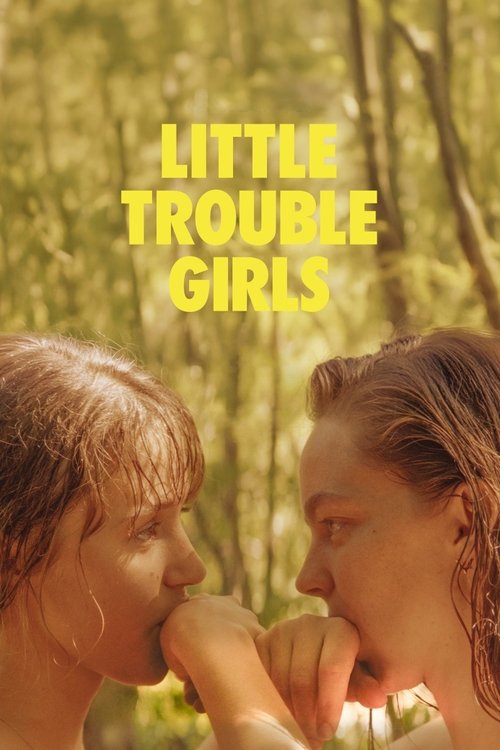
Urška Djukić's 'Little Trouble Girls', originally titled 'Kaj ti je deklica', emerges in 2025 as a compelling and sensitive drama, delving into the intricate emotional landscape of adolescence, faith, and nascent desire. This Slovenian production deftly navigates the often-turbulent waters of self-discovery within a restrictive environment, offering a thoughtful meditation on what it means to come of age.
The Storyline
At its heart, 'Little Trouble Girls' introduces us to 16-year-old Lucia (Jara Sofija Ostan), a newcomer to a Catholic school choir. Here, she quickly forms a deep bond with the older, more self-assured Ana-Maria (Mina Švajger). Their friendship, initially a source of comfort and guidance for Lucia, develops with an intensity typical of adolescent female relationships – a mixture of mentorship, shared secrets, and burgeoning emotional dependency. The setting of a choir retreat, designed for spiritual growth and harmony, becomes instead a crucible for Lucia's awakening. Her unexpected attraction to a restoration worker introduces a potent external catalyst, disrupting the carefully balanced world she shares with Ana-Maria. This new feeling not only creates palpable tension within her friendship with Ana-Maria, hinting at possessiveness or perhaps a fear of losing their unique connection, but also profoundly challenges Lucia's own deeply held faith. The narrative expertly explores the internal conflict of a young girl torn between spiritual devotion, societal expectations, and the undeniable pull of first love and physical attraction. It's a journey of questioning, subtle rebellion, and the often-painful process of understanding one's true self.
Performances & Direction
Urška Djukić's direction is marked by an admirable delicacy and an acute understanding of adolescent psychology. She eschews overt melodrama, opting instead for a nuanced portrayal of emotional shifts and internal struggles, allowing the tension to simmer beneath the surface. The film's aesthetic likely mirrors its themes: perhaps a somewhat austere, yet beautifully composed visual style that emphasizes the characters' introspection and the often-confining nature of their surroundings. Djukić draws truly captivating performances from her young leads. Jara Sofija Ostan as Lucia delivers a remarkable turn, embodying the vulnerability, curiosity, and burgeoning defiance of a teenager grappling with momentous revelations. Her expressions convey volumes, charting Lucia's evolution from tentative newcomer to a young woman on the cusp of understanding her own desires. Opposite her, Mina Švajger as Ana-Maria provides a compelling counterpoint. Her portrayal of a senior student, perhaps burdened by her own expectations or a possessive affection, creates a complex and believable dynamic. The chemistry between Ostan and Švajger is the emotional anchor of the film, making their friendship's eventual strain all the more poignant and impactful.
Final Verdict
'Little Trouble Girls' is a thoughtful, beautifully acted coming-of-age story that resonates with authenticity. Urška Djukić has crafted a film that respects its characters' emotional journeys, offering a powerful look at the intersection of faith, friendship, and first attraction. It's a quiet triumph, deeply felt and skillfully executed, offering much to ponder long after the credits roll. It's a poignant reminder of the complexities of growing up and finding one's voice, even in the most hallowed of halls.
Rating: 6.5/10
Have you seen 'Little Trouble Girls'? Share your thoughts on Lucia's journey and the film's delicate balance of faith and desire in the comments below!








💬 Comments (0)