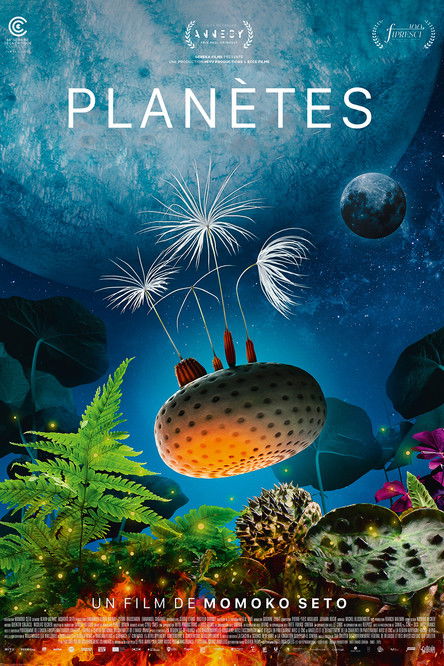
Original Title: Planètes
Year: 2026
Genre: Animation, Science Fiction
Duration: 1h 16min
Cast:
Momoko Seto's 'Dandelion's Odyssey' (originally titled 'Planètes') emerges as a profound, albeit brief, cinematic experience from 2026, positioning itself as a contemplative piece within the animation and science fiction genres. Clocking in at a precise 1 hour and 16 minutes, this film embarks on an audacious premise: two dandelion balls, solitary witnesses to Earth's nuclear self-destruction, undertake an epic quest for new soil, carrying the fragile hope of their species' continuation.
A Fragile Hope in a Nuclear Winter
At its core, 'Dandelion's Odyssey' is a powerful allegory for resilience and the enduring spirit of life in the face of ultimate devastation. Seto masterfully translates the monumental scope of a post-apocalyptic world into the intimate journey of two seemingly insignificant entities. The film's narrative, while simple, is deeply evocative, forcing audiences to confront humanity's destructive capabilities and ponder what true survival might look like. The dandelions, often dismissed as weeds, become symbols of tenacious hope, their fluffy parachutes carrying not just seeds, but the very essence of continuation against an otherwise barren backdrop. This isn't merely a story of escape; it's a testament to the biological imperative to persist, to find light even in the darkest corners of existence.
Visual Poetics and Thematic Resonance
One can anticipate 'Dandelion's Odyssey' to be a triumph of visual storytelling. Seto's direction likely leverages animation to create breathtaking contrasts: the desolate, scarred landscapes of a dying Earth juxtaposed with the delicate, almost ethereal presence of the dandelions. The animation style, while not explicitly detailed, would need to convey both the macro-scale destruction and the micro-scale struggle for survival with equal weight. The film's short duration suggests a lean, impactful narrative, where every frame and sound cue contributes to its thematic depth. It's a meditation on loss, rebirth, and the cyclical nature of existence, wrapped in a sci-fi package that feels both fantastical and terrifyingly real. The 'odyssey' isn't just a physical journey but an existential one, exploring themes of belonging, purpose, and the ultimate search for sanctuary.
Momoko Seto's Vision: Beyond the Bloom
Director Momoko Seto is known for her distinctive approach to storytelling, often exploring the natural world and scientific concepts through a unique, often minimalist lens. With 'Dandelion's Odyssey,' she seems poised to deliver a work that is both intellectually stimulating and emotionally resonant. Her choice to focus on dandelions, organisms often overlooked, speaks volumes about her desire to find grandeur and profound meaning in the seemingly mundane. The film avoids traditional anthropomorphism, instead inviting viewers to connect with the dandelions on a fundamental, biological level, emphasizing the shared drive for life across all species. This directorial choice elevates the movie beyond a simple animated adventure, transforming it into a thought-provoking examination of life itself.
The Emotional Core of an Unlikely Odyssey
Despite its fantastical premise and non-human protagonists, 'Dandelion's Odyssey' promises a deeply emotional experience. The silent struggles, the vast emptiness of space, and the sheer uncertainty of their mission are likely to evoke a sense of empathy and wonder. The film's 76-minute runtime is perfectly suited for an immersive, yet concise, journey, allowing its powerful message to linger without overstaying its welcome. It's a reminder that even the smallest flickers of life can carry the greatest weight of hope, challenging audiences to reflect on their own place within the planet's intricate, often fragile, ecosystem. This movie is set to be a quiet but potent cinematic achievement, leaving an indelible mark on those who witness its delicate, yet ultimately hopeful, journey.
How might the unique perspective of dandelion protagonists shape our understanding of survival in post-apocalyptic narratives compared to human-centric stories?
💬 Comments (0)