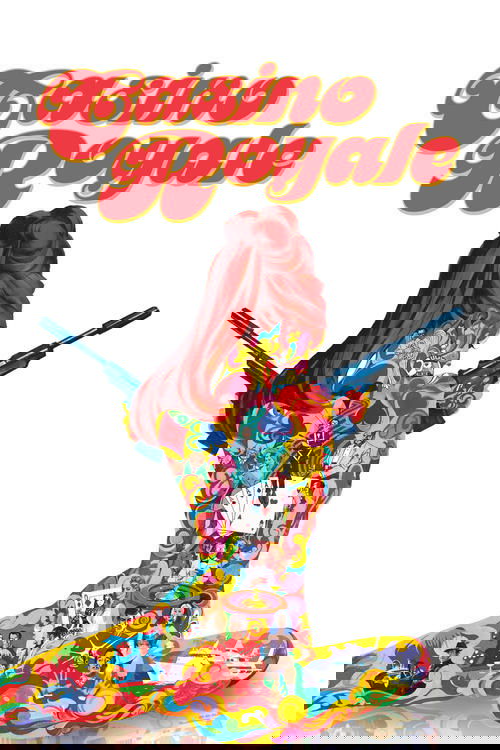
Original Title: Casino Royale
Year: 1967
Genre: Adventure, Action, Comedy
Duration: 2h 11min
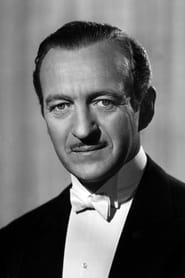
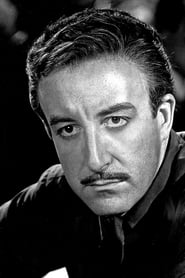
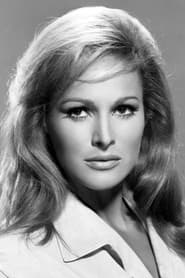
Cast: David Niven, Peter Sellers, Ursula Andress, Orson Welles
A Madcap, Multi-Director Spy Spoof
'Casino Royale' (1967) stands as a fascinating, if utterly bewildering, anomaly in the espionage film genre, particularly within the orbit of James Bond. Born from rights issues and a desire to lampoon the increasingly popular Eon Productions' Bond films, this movie eschews conventional narrative for a maximalist, psychedelic, and often nonsensical comedic assault. With five credited directors—Robert Parrish, Val Guest, Ken Hughes, John Huston, and Joseph McGrath—it's less a cohesive vision and more a wild anthology of talent, ideas, and chaotic whims, resulting in a film that is both a product of its time and timeless in its sheer audacity.
The Ensemble and the Absurd Premise
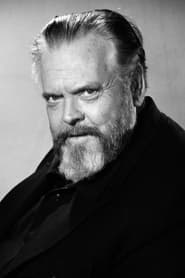
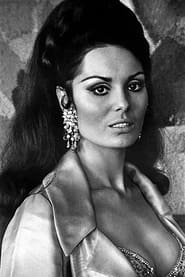
The plot, if one can call it that, introduces a retired Sir James Bond (David Niven), whose legend is so great that SMERSH can only be thwarted by tricking them into believing every agent is now 'James Bond'. This allows for a parade of eccentric characters, most notably Peter Sellers as Evelyn Tremble, the baccarat expert posing as Bond, and Ursula Andress returning as Vesper Lynd, albeit a different iteration. Orson Welles, as the sinister Le Chiffre, delivers a menacing yet oddly charismatic performance, grounding some of the film's more outlandish sequences with his gravitas, particularly during the central baccarat showdown. The film thrives on its cast, even if their individual narratives often feel disjointed.
Strengths in Style and Satire
Where 'Casino Royale' excels is in its visual flair and unwavering commitment to its satirical premise. The production design is opulent, vibrant, and distinctly 1960s, a veritable feast for the eyes that perfectly complements the film's anarchic spirit. The comedy is broad, slapstick, and often surreal, taking every spy trope and turning it on its head. From exploding milk floats to a climactic, no-holds-barred free-for-all, the film revels in its own excessive nature. However, this very excess is also its primary weakness; the sprawling narrative, inconsistent tone, and occasionally self-indulgent humor can make for a challenging viewing experience for those expecting traditional spy-thriller pacing.
A Cult Classic's Enduring Legacy
Ultimately, 'Casino Royale' (1967) is not a film to be judged by conventional cinematic standards. It's a grand experiment, a star-studded spectacle of controlled chaos that redefined what a 'Bond film' could be, even if it wasn't canon. Its fragmented structure, born from its complex production, gives it a unique, almost dreamlike quality that continues to intrigue and divide audiences. For fans of avant-garde comedy, classic spy spoofs, or simply a bewildering trip down a psychedelic cinematic rabbit hole, this 'Casino Royale' offers an unforgettable, if at times exhausting, ride.
Considering the film's deliberate embrace of absurdity and its unique meta-narrative, how do you think 'Casino Royale' (1967) influenced subsequent parodies or satirical takes on the spy genre?


💬 Comments (0)