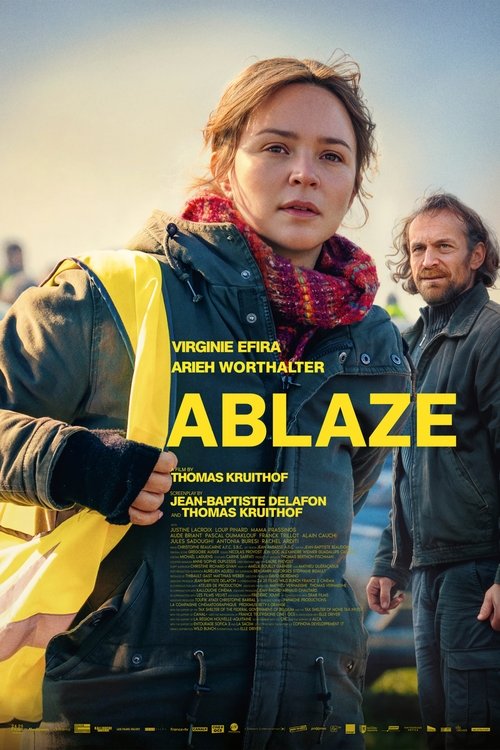
Original Title: Les Braises
Year: 2025
Genre: Drama
Duration: 1h 42min
Cast: Virginie Efira, Arieh Worthalter, Mama Prassinos, Justine Lacroix
Ablaze (Les Braises): When Personal Lives Meet Public Fury
Thomas Kruithof's 'Ablaze' (Original Title: 'Les Braises') is a searing drama that delves into the profound impact of societal upheaval on the most intimate of relationships. Set against the backdrop of France's Yellow Vests movement, the film masterfully explores how collective anger and the yearning for change can ignite not only political landscapes but also the very foundations of a seemingly unshakeable marriage. At 1 hour and 42 minutes, the film is a potent, unyielding examination of love, conviction, and the often-unseen costs of activism.
The Spark of Discontent and Domesticity
The narrative centers on Karine (Virginie Efira) and Jimmy (Arieh Worthalter), a couple celebrating two decades of enduring love, two children, and a stable, if modest, life. Karine, a factory worker, finds herself drawn into the burgeoning Yellow Vests movement, a wave of collective frustration, anger, and nascent hope for a fairer society. Her initial curiosity evolves into deep commitment, resonating with a sense of purpose and belonging. Jimmy, a truck driver focused on growing his small business, represents a more grounded, pragmatic perspective, initially supportive but increasingly wary as Karine’s dedication intensifies. Kruithof meticulously crafts the shift in their dynamic, showing how an external political movement gradually erodes the internal equilibrium of their relationship. The brilliance lies in its refusal to villainize either perspective, instead presenting two valid, human responses to seismic social change.
Performances That Burn Bright
Virginie Efira delivers a tour-de-force performance as Karine. She imbues the character with a raw authenticity, portraying the complex journey from a quiet factory worker to a passionate activist with remarkable conviction. Efira’s ability to convey both the exhilarating power of collective action and the painful erosion of personal bonds is truly compelling. Arieh Worthalter, as Jimmy, is equally impressive, offering a nuanced portrayal of a man caught between his love for his wife and his growing frustration with her all-consuming cause. His quiet desperation and attempts to preserve their family unit provide a crucial counterpoint to Karine's fervor. The chemistry between Efira and Worthalter is palpable, making their twenty-year history believable and their fracturing all the more heartbreaking. The supporting cast, including Mama Prassinos and Justine Lacroix, adds depth to the family unit, grounding the narrative in relatable domesticity.
Kruithof's Controlled Blaze
Director Thomas Kruithof handles this sensitive subject matter with both urgency and restraint. He avoids didacticism, opting instead for an observational style that allows the audience to witness the events unfold and the characters react organically. The pacing is deliberate, allowing emotional beats to land effectively without ever feeling sluggish. Kruithof’s direction underscores the film's central tension: the collision of personal life with political ideology. The cinematography often highlights the stark contrast between the vibrant, energized protests and the quieter, increasingly strained moments within the couple's home, creating a visual metaphor for their diverging paths. While the film may not offer easy answers, it prompts essential questions about compromise, conviction, and the definition of a 'better' future, both individually and collectively.
Verdict: A Resonant and Timely Drama
'Ablaze' is more than just a political drama; it is a deeply human story about the resilience and fragility of relationships in the face of overwhelming external forces. It is a powerful reflection on contemporary society, capturing the zeitgeist of a world grappling with discontent and the desire for radical change. While some might find its exploration of the Yellow Vests movement less about the specifics of the movement itself and more about its ripple effects on personal lives, this focus is precisely where the film's strength lies. It resonates long after the credits roll, prompting introspection on our own values and commitments. This is a must-see for those who appreciate character-driven dramas with a strong social conscience, anchored by superb performances.
How effectively do you think 'Ablaze' navigates the delicate balance between showcasing a significant social movement and focusing on its intimate, familial consequences?









💬 Comments (0)